September 5, 2026
Walmart Wants Your Face, Fingerprints, and Voice. Shop Local Instead.
The big chains have turned shopping into a data-harvesting operation. Here's why your neighbors at the local shop are the better deal.
I saw a post online the other day that stopped me cold. It broke down Walmart's updated customer privacy policy—and the list of information these big chains say they can collect on you is honestly hard to believe.
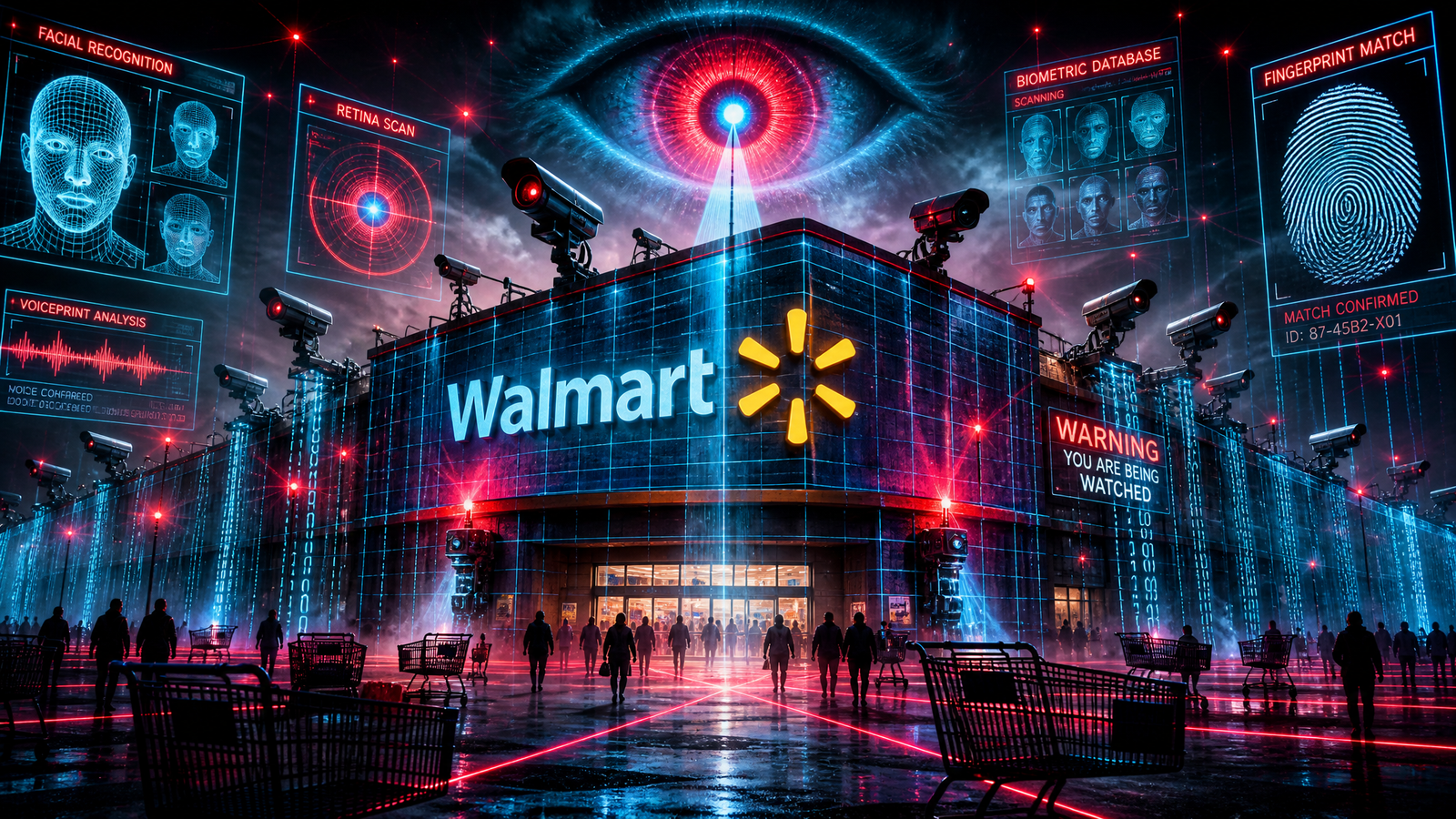
I'm not talking about your name and email. I mean your actual body and every move you make. Here's what the policy reportedly lays out:
- •Name, email address, shipping address, IP address
- •Social media information, browsing and search activity
- •Keystroke patterns (how you type)
- •Voiceprint (the unique sound of your voice)
- •Iris and retina imagery
- •Face geometry (facial recognition)
- •Palm prints and fingerprints
- •Household income, education, employment information
- •Family health information
- •Exact device location
- •Criminal history and background check data
- •Individual preferences, characteristics, shopping patterns, and spending tendencies
- •License plate data captured by automated readers in their parking lots
- •In-store surveillance camera footage of you
- •In-store location tracking through your phone's Wi-Fi connection
Read that list again. Retina scans. Palm prints. The sound of your voice. Cameras reading your license plate the second you pull into the parking lot.
You Don't Even Have to Use Their App
Here's the part that really gets me. A lot of people figure, "I'll just skip the app and I'm fine." Not anymore.
According to the breakdown, some of this data gets collected whether you use their app or not. Just walking through the door or pulling into the lot is enough:
- •Walk into the store, and their cameras can capture your face geometry.
- •Pull into the parking lot, and license plate readers log your plate with a time and location stamp.
- •Have your phone in your pocket connected to their store Wi-Fi? They can track where you go, aisle by aisle.
- •Call their customer service line with a complaint? That call can be used to build a voiceprint of you.
You're being scanned, logged, and cataloged just for buying paper towels. As somebody put it online, we've gone from "Would you like a receipt?" to "Thank you—we've catalogued your face, car, voice, income, and approximate location in aisle 7."
How is this even legal? Honestly, I don't know. We need real privacy laws, and we need them yesterday. But while the lawyers and politicians sort that out, you've got a choice about where you spend your money right now.
What Happens at the Local Shop
Let me tell you what our "data collection policy" looks like here at NRV Shipping in Radford and Pulaski.
You walk in. We say hello—probably by name if we've seen you before. You tell us what you need shipped. We help you pick the cheapest, fastest way to get it there. You pay. You leave. The end.
No facial recognition. No retina scan. No camera reading your plate in the lot. No app quietly logging which aisle you lingered in. We don't want your palm print—we want to help you mail your package and get you on your way.
That's not some fancy privacy feature we built. That's just what a normal local business is. It's how commerce worked for a couple hundred years before the big chains decided your personal information was worth more than your purchase.
Why Shopping Local Actually Matters
The privacy stuff is reason enough to think twice about the big chains. But shopping local in the New River Valley pays off in ways that go way beyond keeping your fingerprints to yourself:
- •Your money stays home. When you spend at a locally owned shop in Radford or Pulaski, a much bigger share of that dollar stays right here—paying local wages, local rent, and local taxes that fund our schools and roads. When you spend at a national chain, most of it gets on the next truck out of town and lands in a corporate account far, far away.
- •You're a person, not a data point. We remember your name, not your "customer profile ID." When something goes wrong with a shipment, you talk to a real human standing in front of you—not a chatbot and not a voiceprint system.
- •Real accountability. If we mess up, you know exactly where to find us. We live here too. Our kids go to the same schools. We see you at the grocery store and at church. That keeps us honest in a way no corporate policy ever could.
- •Local businesses give back. The little league team, the school fundraiser, the church raffle—that's local businesses. The big chains headquartered a thousand miles away aren't sponsoring your kid's team.
- •You keep Main Street alive. Every empty storefront in a small town started with people deciding it was easier to shop at the big box on the edge of town. Every local business you support is a vote for a downtown that still has a heartbeat.
We Get It—Sometimes You Need the Big Store
Look, I'm not going to pretend nobody in Pulaski County ever needs to run to a big-box store. Sometimes you do. We're realists.
But for the things a local shop can handle—shipping, packing, printing, notary, mailboxes, shredding—why hand your business (and your biometrics) to a corporation that treats you like a walking data mine? You can get better, friendlier service down the street and keep your money and your privacy in the New River Valley.
The Bottom Line
The big chains have quietly turned a simple shopping trip into a full-blown data-harvesting operation. Your face, your fingerprints, your voice, your car, your income, your health—all of it fair game the moment you walk through their doors.
We're not built that way, and we never will be. Next time you've got something to ship or a job we can handle, come see us on East Main Street in Radford or Pulaski. We'll help you out, we'll remember your name, and the only thing we'll ever collect is your business—gladly.
Shop local. Keep your money here. Keep your face your own.